
This gene encodes a member of a subfamily of RING-finger type E3 ubiquitin ligases. The protein binds to specific DNA sequences, and recruits a histone deacetylase to regulate gene expression. Its expression peaks at late G1 phase and continues during G2 and M phases of the cell cycle. It plays a major role in the G1/S transition by regulating topoisomerase IIalpha and retinoblastoma gene expression, and functions in the p53-dependent DNA damage checkpoint. It is regarded as a hub protein for the integration of epigenetic information. This gene is up-regulated in various cancers, and it is therefore considered to be a therapeutic target. Multiple transcript variants encoding different isoforms have been found for this gene. A related pseudogene exists on chromosome 12.
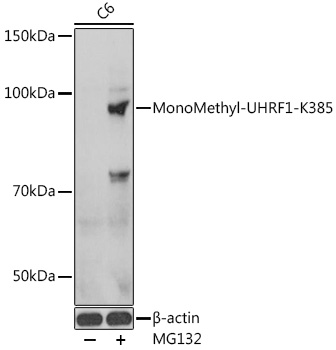
| Pack Size | 100ul, 1ml, 20ul |
|---|---|
| Applications | DB, ELISA, WB |
| Host Species | Rabbit |
| Ig Isotype | IgG |
| Antibody Type | Methylated Antibody |
| Organism Species | Human |
| Concentration | – |
| Product Synonyms | MonoMethyl-UHRF1-K385 |
| Observed Mol Wt | 90kDa |
| Alternative Names | Np95; hNP95; ICBP90; RNF106; TDRD22; hUHRF1; huNp95; MonoMethyl-UHRF1-K385 |
| Immunogen (Antigen) | synthetic peptide |
| Format | Liquid |
| Buffer Formulation | 50% glycerol, PBS with 0.02% sodium azide, pH7.3 |
| Reactivity | Human, Mouse, Rat |
| Uniprot ID | 29128 |
| Gene ID | Q96T88 |
| Purification | Antigen-specific affinity chromatography followed by Protein A affinity chromatography |
| Usage | For Research Use Only. Not for diagnostics or human use. |
| Shelf Life | 12 months at time of shipping |
| Shipping | Shipped in Dry Ice at -20 Degree Celsius |
| Storage | Store at -20 Degree Celsius. It is recommended to aliquot and store to avoid repeated freeze-thaw as it affects the stability of the antibody. |
| Research Areas | Cell Biology; Developmental Biology; Immunology |
| Disclaimer | The data indicated herein are as indicated and validated in our laboratory. These reagents are for research use only and not for in-vitro diagnostics or human use. |
Related Products
-
 Sale
Cancer
Sale
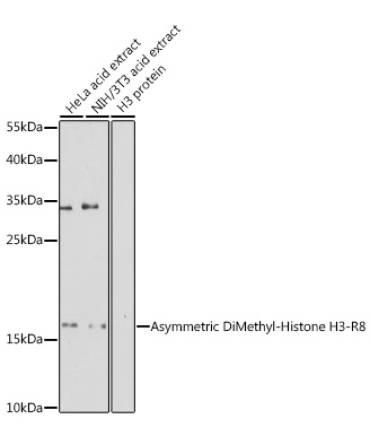
CancerAsymmetric DiMethyl-Histone H3-R8 Rabbit Polyclonal Antibody
Price range: $100.00 through $430.00 -
 Sale
Cell Biology
Sale
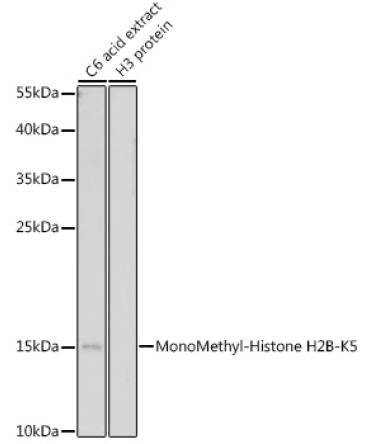
Cell BiologyMonoMethyl-Histone H2B-K5 Rabbit Polyclonal Antibody
Price range: $100.00 through $430.00 -
 Sale
Sale
-
 Sale
Sale
-
 Sale
Sale
-
 Sale
Cancer
Sale
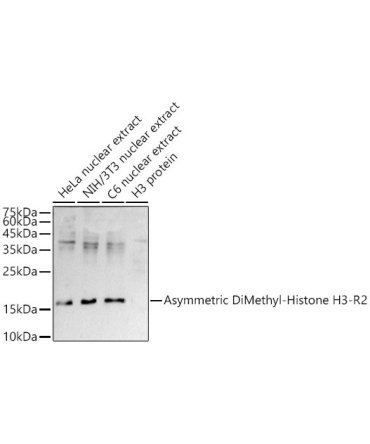
CancerAsymmetric DiMethyl-Histone H3-R2 Rabbit Polyclonal Antibody
Price range: $100.00 through $430.00
Reviews
There are no reviews yet.